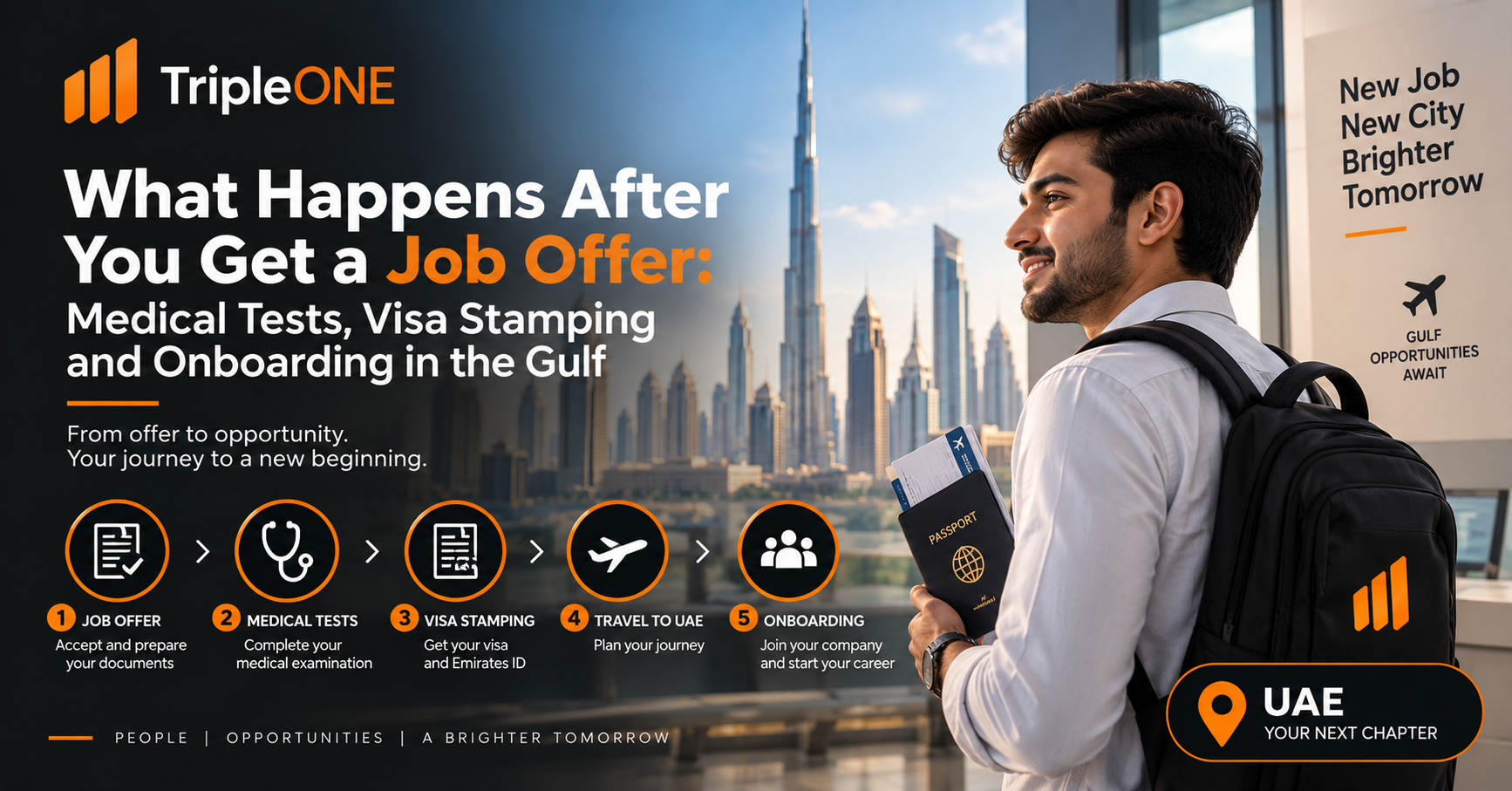
Getting the job offer feels like the finish line, but in Gulf hiring, it is actually the halfway point. Between accepting an offer and your first day at work sits a process involving medical tests, visa stamping, and paperwork that can feel confusing if nobody explains it clearly. Here is what actually happens, in order, so you know what to expect and how long each stage typically takes.
Step 1: Signing the Offer Letter and Employment Contract
Once you accept a role, you should receive a formal offer letter and, shortly after, an employment contract. Read both carefully. The contract should state your exact salary, job title, working hours, probation period, and who is responsible for visa costs, flights, and accommodation if applicable. This is your last opportunity to raise questions or negotiate terms before the visa process formally begins, so do not sign anything you have not fully read and understood.
Step 2: The Medical Fitness Test
Almost every Gulf work visa requires a medical fitness test, typically covering a general health check and screening for specific communicable diseases. This is usually arranged either in your home country before departure or shortly after arrival, depending on the employer and visa type. Results are generally valid for a limited window, so timing matters. If a result comes back as unfit, most countries have a clear appeals or retest process, so it is not automatically the end of the opportunity.
Step 3: Visa Stamping and Emirates ID or Iqama Processing
Once medical clearance is confirmed, your employer submits your paperwork for entry permit and residence visa stamping. In the UAE this is followed by Emirates ID registration, while in Saudi Arabia the equivalent is the Iqama. This stage is largely administrative and handled by your employer or their PRO, but you will typically need to provide biometrics, such as fingerprints and a photo, in person once you arrive or shortly after.
Step 4: Flight, Arrival and Airport Formalities
Depending on your contract, your employer may book and cover your flight, or you may need to arrange it yourself for later reimbursement, so confirm this detail in advance. On arrival, have your offer letter, passport, and any reference numbers from your visa process easily accessible, since immigration officers may ask for them, particularly if your visa is still being finalized.
Step 5: Your First Week on the Job
Your first days usually involve site or office orientation, ID badge issuance, and finalizing any remaining paperwork such as bank account setup for salary payments. This is also when your probation period officially begins, so pay attention to performance expectations communicated during this stage, since probation is typically when most early misunderstandings get resolved.
How Long the Whole Process Usually Takes
From accepted offer to first day, the full process commonly takes anywhere from a few weeks to around two months, depending on the country, the role, and how quickly documents are submitted. Roles with straightforward visa categories tend to move faster, while specialized positions or first-time employers in a given free zone can take longer due to additional approvals.
Frequently Asked Questions
Q: What happens if I fail the medical fitness test?
A: Most Gulf countries allow a retest or appeal process, and in many cases the issue can be resolved with treatment or further documentation. It does not automatically cancel your job offer, though it will affect timing.
Q: Who pays for the visa and medical test, me or the employer?
A: In legitimate arrangements, the employer typically covers visa costs, though practices vary by company and country. This should be clearly stated in your offer letter before you accept.
Q: Can I start working before my visa is fully stamped?
A: No. Working before your visa is officially processed is illegal and can affect both you and your employer. Always confirm your visa status is finalised before beginning any work.
Conclusion
Understanding the steps between an offer and your first day removes a lot of unnecessary stress from what should be an exciting transition. If you are currently searching for verified opportunities across the UAE, Qatar, Saudi Arabia and other Gulf markets, TripleONE Jobs connects candidates directly with employers who follow this process properly, from offer to onboarding.
