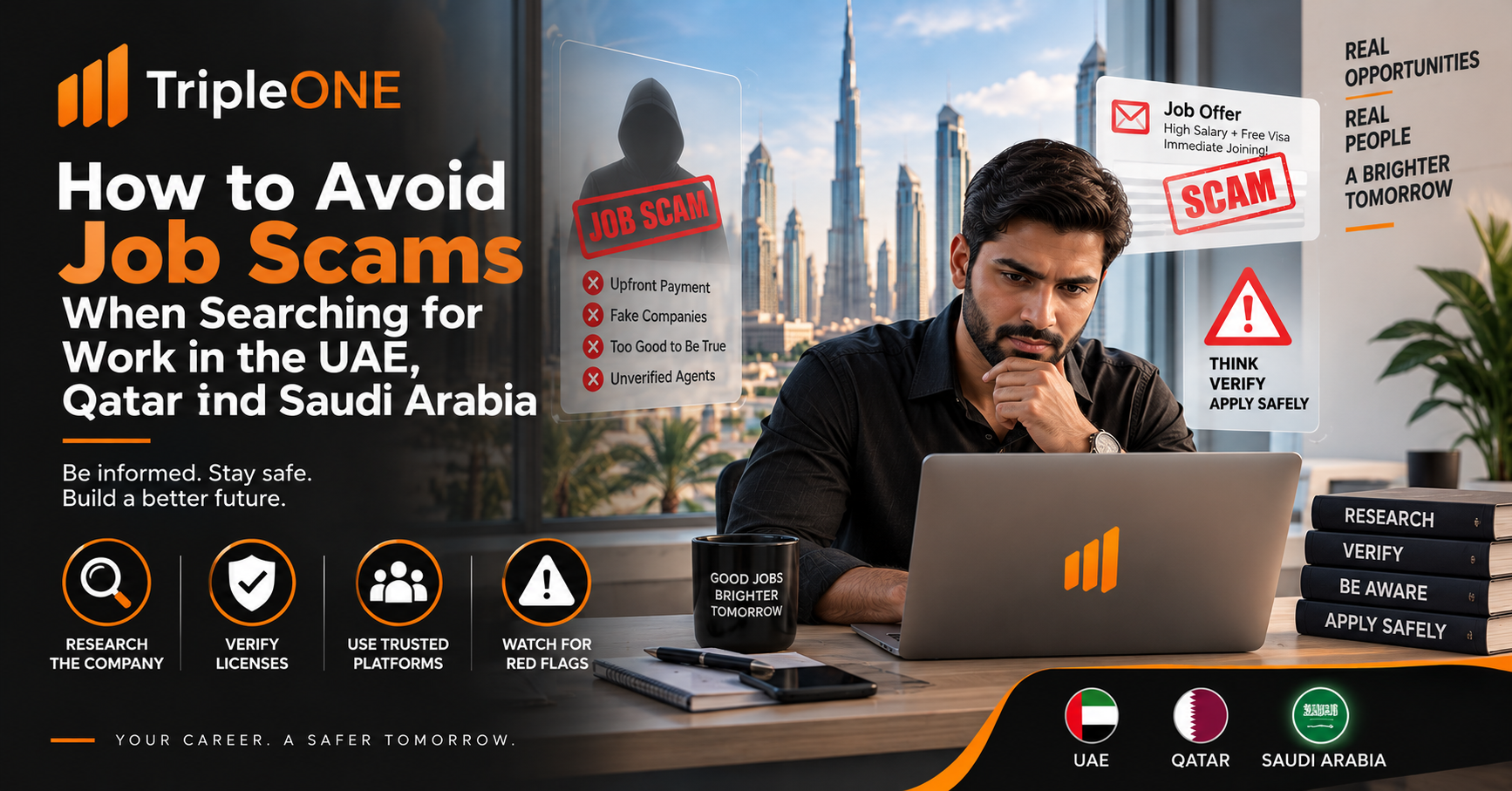
Every year, job seekers across South Asia and East Africa lose money, and sometimes far more, to fake job offers promising work in the UAE, Qatar, or Saudi Arabia. These scams have become more sophisticated, often copying real company logos and using professional-looking websites. The good news is that most of them share the same handful of warning signs once you know what to look for.
Why Job Scams Are So Common in the Gulf Hiring Market
The Gulf hiring market moves fast and involves large numbers of candidates applying from abroad, often through agencies rather than direct contact with employers. That distance between candidate and employer creates room for fraud, since it is harder for someone applying from outside the country to verify a company's legitimacy in person. Scammers exploit exactly that gap, along with the genuine urgency many job seekers feel to secure work quickly.
The Biggest Red Flags to Watch For
Be cautious of job offers you receive without ever applying, salaries that are noticeably higher than the market rate for the role, contracts with vague or missing details about the actual employer, and communication that happens only through personal messaging apps rather than official email or phone lines. Pressure to decide immediately, combined with any request for payment, is one of the clearest combinations of a scam in progress.
Never Pay for a Job, Full Stop
This is worth repeating because it is the core of almost every scam: no legitimate employer or licensed agency asks a candidate to pay for a job, a visa guarantee, or a processing fee tied to placement. Reimbursing a documented, verifiable cost like a medical test is different, but even then the request should come with a clear invoice and a reasonable amount. If in doubt, do not send money, no matter how convincing the story sounds.
How to Verify a Company or Agency Before Applying
Search the company's name alongside its actual trade license number, which any legitimate business will have. Check whether the company has a real, verifiable presence, an official website, a LinkedIn page, and a physical address that matches what you were told. If an agency is involved, ask which employer they represent and try to confirm that relationship independently rather than relying only on what the recruiter tells you.
What to Do If You Think You Have Been Scammed
Stop all communication and payment immediately. Save every message, email, and receipt as evidence. Report the incident to the relevant authority, such as MOHRE in the UAE or your home country's labour ministry, and to the platform where the job was posted if applicable. Acting quickly improves your chances of a resolution and helps prevent the same scam from reaching others.
Frequently Asked Questions
Q: Is it normal for a company to interview me only over WhatsApp?
A: It can be a normal part of an initial screening, but a legitimate hiring process should also include a phone or video call, and eventually written documentation on official letterhead. Relying solely on informal messaging throughout is a warning sign.
Q: Can a real agency ask me to pay for my flight or visa?
A: Practices vary, but any cost you are asked to cover should be clearly explained, documented, and reasonable. Be especially cautious of large upfront payments requested before any contract is signed.
Q: How can I quickly check if a job posting is legitimate?
A: Cross-check the company name, look for a genuine online presence, and see whether the same role is posted directly on the company's own website or a verified job portal, not only through a third party contact.
Conclusion
Job scams rely on urgency and a lack of verification, both of which are avoidable with a little patience. Take the time to check before you commit, and you significantly reduce your risk. TripleONE Jobs works only with verified, licensed employers and agencies, so every listing on the platform has already passed the checks this article recommends.
